A grab bar only helps if it’s within reach when you actually need it. That’s why figuring out where to put bathroom grab bars takes more thought than choosing a standard height and mounting one wherever there’s open wall space.
The best locations depend on how you move through the bathroom. Where do you reach when stepping into the shower? Do you need support when standing up from the toilet? Would having something to hold make it easier to lower yourself onto a shower seat?
Those everyday movements should guide placement.
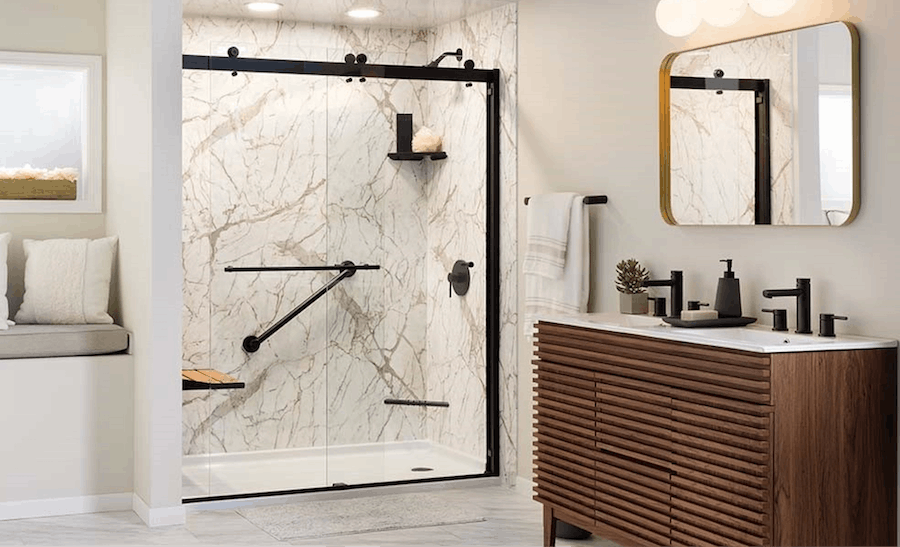
At Bath Planet of Eastern Michigan, we help homeowners create bathrooms that are easier and more comfortable to use. Depending on your needs, that can include strategically placed grab bars, shower seating, low- or barrier-free entries, handheld showerheads, and other safety and accessibility features.
If your bathroom’s getting harder to navigate, call us at 810-243-1077 or contact us online to talk about your options. Here’s what you should know about choosing useful grab bar locations throughout the bathroom.
Where Should Bathroom Grab Bars Go?
Grab bars are most helpful in places where you’re changing position, stepping over a threshold, or more likely to lose your balance.
Common locations include:
- At the shower or bathtub entrance for support while stepping in and out
- Along a shower wall for stability while standing, turning, or bathing
- Near shower controls if reaching for them makes you feel unsteady
- Beside a shower seat to make sitting down and standing up easier
- Along a bathtub wall for support while entering, exiting, or changing position
- Beside the toilet to provide leverage when sitting or standing
The National Institute on Aging recommends grab bars near toilets and in bathing areas as part of improving bathroom safety for older adults.
That said, there isn’t one placement plan that works for everyone. The best location depends on the person using the bathroom, the layout of the space, and the specific movement the bar is meant to support.
Where to Put Grab Bars in a Shower
Showers often benefit from more than one grab bar because getting in, standing, reaching, sitting, and stepping back out all involve different movements.
Near the Shower Entrance
A vertical grab bar near the entrance can give you a secure handhold before you step into or out of the shower.
This is especially helpful when there’s a curb or threshold to step over. For a moment, you may be balancing on one leg, often while the floor or your feet are wet.
Ideally, the bar should be close enough to reach before you cross the threshold.
If stepping over the curb has already become difficult, it may also be worth reconsidering the shower itself. A barrier-free shower can reduce the need to step up and over an obstacle, making the bathing area easier to enter.
Along the Main Shower Wall
A horizontal grab bar along the main shower wall can provide support throughout the bathing area.
It may help while you:
- Turn around
- Wash your legs or feet
- Reach for soap or shampoo
- Adjust the showerhead
- Move toward a shower seat
- Steady yourself if you lose your balance
This type of bar is useful for ongoing stability rather than one specific movement.
It’s also important not to rely on towel bars, shower doors, soap dishes, or plumbing fixtures for support. They generally aren’t designed to hold body weight.
Vertical or Angled Grab Bars
Not every grab bar needs to be horizontal.
A vertical grab bar can work especially well near a shower entrance because it’s easy to reach from different heights.
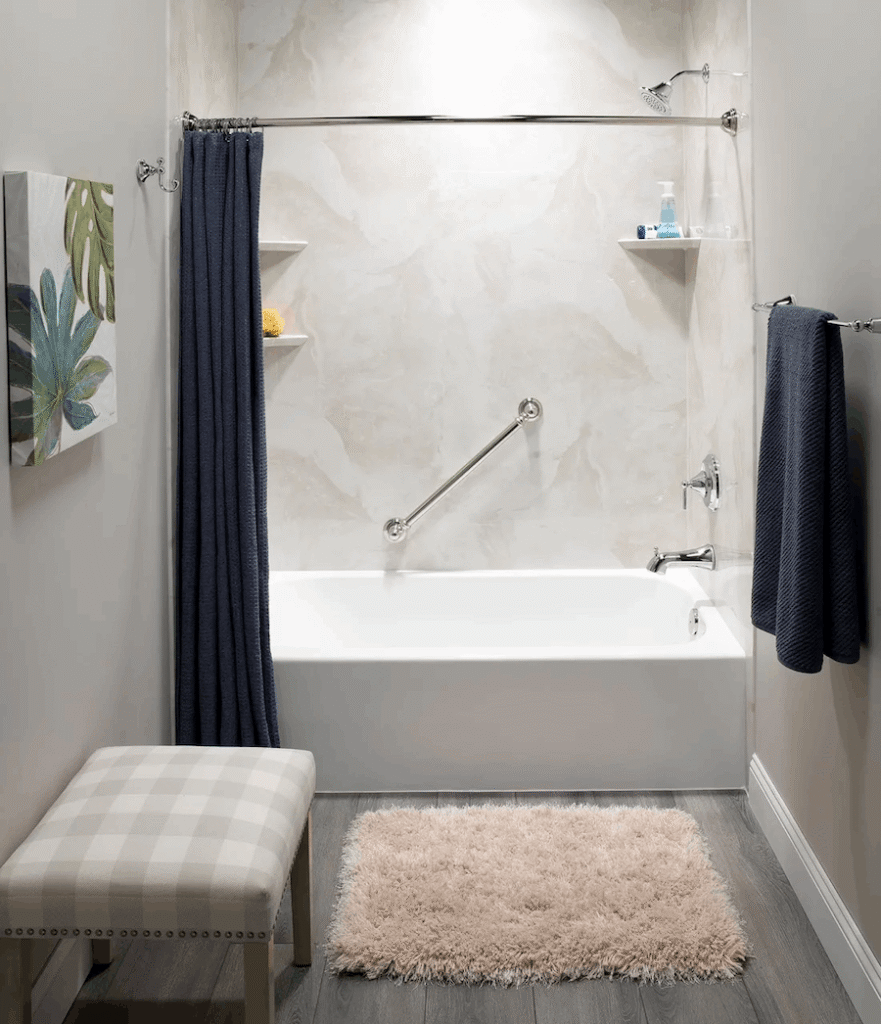
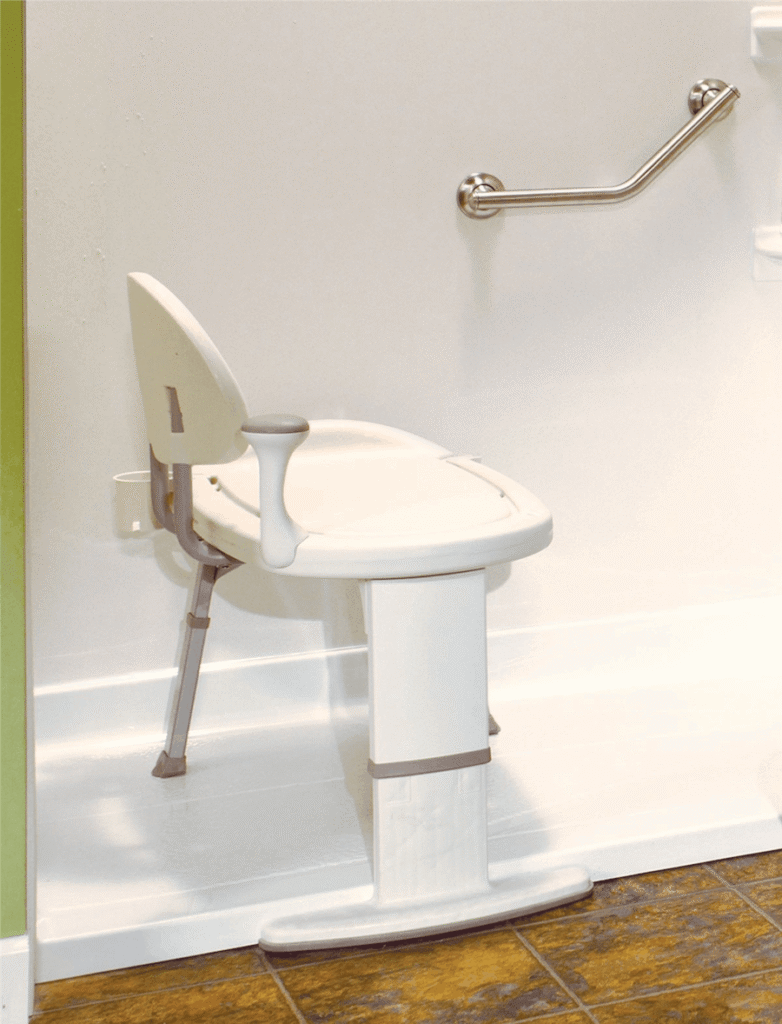
An angled grab bar may be useful near a shower seat because your hand can move upward along the bar as you go from sitting to standing.
When choosing the orientation, think less about what looks best and more about what the bar needs to help you do. The movement should guide the placement.
Where Should Grab Bars Go Near a Shower Seat?
If you’re adding a built-in or fold-down shower seat, think about the entire movement of sitting down and standing back up.
A grab bar should be close enough that you don’t have to twist, reach behind yourself, or lean across the shower for support. Depending on the layout, a horizontal or angled bar beside the seat may work well.
It’s also helpful to keep shower controls and a handheld showerhead within easy reach from the seated position.
If you’re planning a walk-in shower or shower replacement, consider the seat, controls, storage, and grab bars together. Planning these features from the start can create a more comfortable and functional shower than adding accessibility features later.
Where to Put Grab Bars Around a Bathtub
Traditional bathtubs present a different challenge because you have to step over the side to get in and out.
A vertical grab bar near the tub entrance can provide a secure handhold while you lift one leg over the tub wall. Once you’re inside, another bar along the main wall can provide support while standing, turning, or changing positions.
Useful locations can include:
- Near the tub edge: A vertical bar can help when stepping in or out.
- Along the long wall: A horizontal or angled bar can provide support while standing or moving in the tub.
- Near the sitting area: If you sit in the tub, the bar should be positioned to help when lowering yourself and standing back up.
The goal is to keep support comfortably within reach. You shouldn’t have to stretch across the bathtub or twist awkwardly to grab the bar.
If you’re considering a bathtub replacement, planning grab bar placement before installation can help create a more practical finished space.
Where to Put Grab Bars Near the Toilet
Sitting down and standing up from the toilet can become harder when balance, strength, mobility, or joint comfort changes.
A grab bar beside the toilet can provide extra leverage and stability during both movements.
If there’s a wall next to the toilet, a horizontal or angled grab bar may work well. Some layouts can also accommodate support behind the toilet.
Whatever the configuration, you should be able to reach the bar naturally from a seated position without twisting your body or leaning too far.
This can require extra planning in a small bathroom, where the toilet, door swing, storage, and available wall space all affect placement.
How High Should Bathroom Grab Bars Be?
There isn’t one ideal grab bar height for every home.
ADA accessibility standards specify a height of 33 to 36 inches above the finished floor for certain horizontal grab bars in covered accessible facilities. That range can be a useful reference, but it isn’t automatically the right height for every private bathroom.
Residential placement can depend on:
- Your height and arm reach
- Whether you’ll use the bar while sitting or standing
- Shower seat height
- Bathroom layout
- The direction you’ll be moving
- Whether multiple people will use the same bar
A grab bar can follow a common measurement and still feel awkward if you have to stretch or bend to reach it.
Before installation, stand or sit where you’ll use the bar and pay attention to where your hand naturally falls. That can help determine a more comfortable location.
Does Grab Bar Length Matter?
Yes. The right length depends on how and where you’ll use the bar.
A shorter grab bar may provide enough support at a specific entry or transfer point. A longer horizontal bar can give you more room to move your hand as you walk, turn, or reposition yourself in the shower.
The wall structure also matters. A grab bar needs to be securely mounted, so length and placement should be considered together rather than chosen for appearance alone.
Why Proper Grab Bar Installation Matters
Knowing where to put bathroom grab bars is only part of creating dependable support. They also need to be installed correctly.
If someone slips and grabs a bar suddenly, the mounting system may have to withstand significant force. That’s why grab bars need appropriate structural support rather than the type of mounting commonly used for towel racks and other bathroom accessories.
Depending on the wall construction and remodeling system, that may mean attaching the bar to structural backing or using a mounting system designed for grab bars.
The bar itself should also be appropriate for the job. Look for:
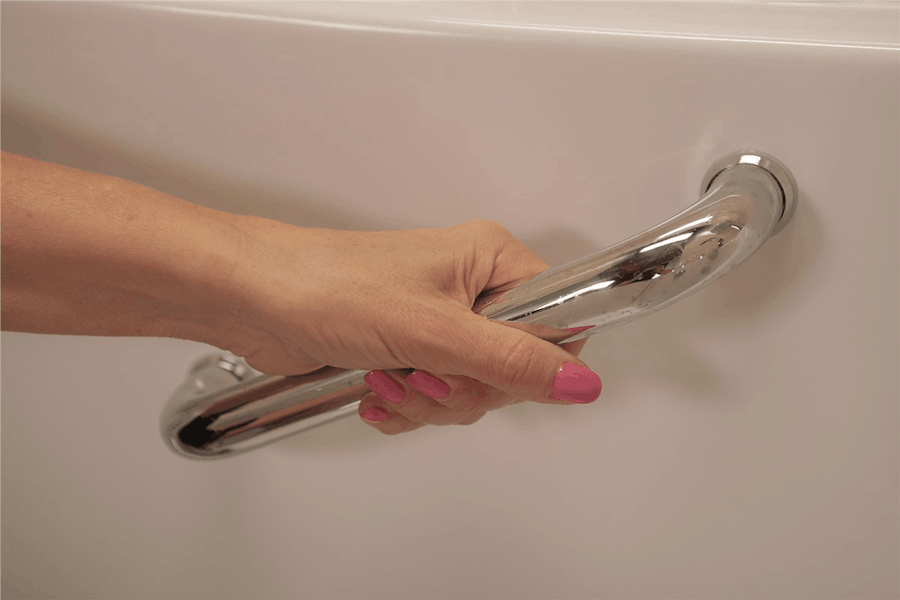
- A comfortable, secure gripping surface
- A diameter that’s easy to hold
- Corrosion-resistant materials
- Enough space between the bar and wall for your hand
- An orientation that supports the movement you need help with
And don’t rely on a towel bar as a substitute. Most towel bars aren’t designed or installed to support body weight.
Do You Need to Follow ADA Grab Bar Requirements at Home?
You’ll probably come across ADA measurements when researching grab bar placement, but it’s important to understand what they apply to.
The Americans with Disabilities Act includes detailed accessibility standards for certain public, commercial, and other covered facilities. Those guidelines address grab bar height, length, clearance, and placement around toilets, tubs, and showers.
A typical private residence generally isn’t required to follow those same specifications.
That said, ADA standards can still be a useful reference when you’re planning an accessible bathroom. For a home, however, the final placement should also reflect the height, reach, mobility, and everyday needs of the people using the space.
A measurement isn’t particularly helpful if the bar ends up somewhere that’s uncomfortable or difficult to reach.
When Grab Bars Should Be Part of a Larger Bathroom Update
Sometimes adding grab bars is enough to make a bathroom easier to use. In other cases, they’re only one piece of the solution.
If you’re having trouble stepping over a high shower threshold, navigating a narrow opening, standing for long periods, or reaching the controls comfortably, a more complete bathroom remodeling project may address those challenges more effectively.
An accessibility-focused bathroom can include:
- A low-threshold or barrier-free shower
- Built-in or fold-down seating
- A handheld showerhead
- Easy-to-reach controls
- Strategically placed grab bars
- Slip-resistant surfaces
- Better lighting
- A more open shower layout
Planning these features together can make the bathroom more comfortable now while also helping it adapt to changing mobility needs over time.
Our bathroom remodeling solutions for seniors can help you consider grab bars, shower access, seating, and other practical details as part of one coordinated design.
Why Homeowners Choose Bath Planet of Eastern Michigan
Grab bars are most effective when they’re planned as part of the bathroom rather than added wherever there happens to be space.
At Bath Planet of Eastern Michigan, we look at the whole bathing area, including the shower entry, seating, controls, wall surrounds, and grab bar placement, so each feature works together to make the space easier to use.
Depending on your project, you may benefit from:
- Personalized design guidance based on your bathroom, preferences, and mobility needs
- Bath Planet products designed specifically for wet-area remodeling
- Accessibility options that can make bathing safer and more comfortable
- One-day installation options for qualifying projects
- Limited lifetime warranty coverage available on Bath Planet products
- Local service throughout Eastern Michigan
Instead of guessing which upgrades will help most, you can work with our team to identify the challenges in your current bathroom and choose solutions that fit the way you use the space.
Make Your Bathroom Safer and Easier to Use
When deciding where to put bathroom grab bars, there’s no single placement that works for everyone. The right location is wherever the bar can provide reliable support during the movements you find most difficult.
That might mean a vertical bar near the shower entrance, a horizontal bar along the bathing wall, support beside a shower seat, or a grab bar next to the toilet. In many bathrooms, a combination of locations works best.
If you’re also dealing with a high threshold, limited shower space, or an awkward layout, grab bars may be even more useful as part of a larger accessibility-focused remodel.
At Bath Planet of Eastern Michigan, we can help you create a bathroom that feels safer, more comfortable, and easier to navigate while still looking like a space you’re proud to have in your home.
Call 810-243-1077 today or contact us online to schedule a consultation and explore bathroom remodeling and accessibility options designed around your needs.
FAQ: Where to Put Bathroom Grab Bars
Where is the best place to put bathroom grab bars?
The best locations are places where you’re most likely to need support while changing positions. Common spots include the shower entrance, along the main shower wall, beside a shower seat, near a bathtub entrance, and next to the toilet. The exact placement should match the user’s reach, mobility, and bathroom layout.
What height should bathroom grab bars be?
For certain accessible facilities, ADA standards specify horizontal grab bars at 33 to 36 inches above the finished floor. In a private home, however, the most comfortable height may vary based on the user’s height, reach, whether they’ll be sitting or standing, and where the bar is located.
Should shower grab bars be vertical or horizontal?
Both can be useful. Vertical grab bars often work well near shower entrances because they’re easy to reach at different heights. Horizontal bars can provide steady support along a shower wall, while angled bars may help with sitting and standing. The best orientation depends on the movement the bar is meant to support.
How many grab bars should you have in a shower?
There’s no set number that works for every shower. Many homeowners benefit from one bar near the entrance and another along the main shower wall. A shower with seating may also need a grab bar positioned near the seat. The layout should be based on how the shower is used.
Where should a grab bar go next to a toilet?
A grab bar should be positioned where it can be reached comfortably while sitting and used for support when standing back up. A side wall is often a practical location for a horizontal or angled bar. The user shouldn’t have to twist or lean excessively to reach it.
Can you install a grab bar anywhere in the bathroom?
Not necessarily. A grab bar needs to be securely mounted so it can handle the force placed on it during use. Wall construction, structural backing, mounting systems, and nearby fixtures can all affect where a bar can be safely installed.
Can a towel bar be used as a grab bar?
No. Most towel bars aren’t designed or installed to support body weight. If you need stability or assistance with balance, use a grab bar that’s specifically designed and properly mounted for that purpose.
Do bathroom grab bars have to meet ADA requirements in a private home?
Typical private residences generally aren’t required to follow the same ADA grab bar standards that apply to certain public and commercial facilities. However, ADA measurements can provide a useful starting point when planning an accessible bathroom. Residential placement should ultimately be tailored to the person using the space.